Pompadour haircut: the length, the fade and the blow-dry
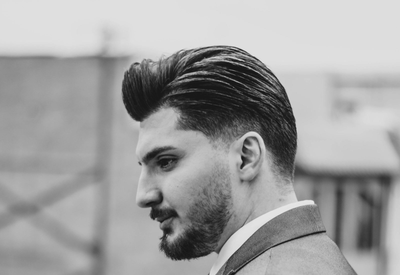
How much hair a tall pompadour needs
A pompadour usually fails for one reason: too little length on top. Someone brings a photo of a tall, sweeping front and has 4 cm at the crown. The shape needs at least 8 to 10 cm at the forehead, ideally up to 12 cm across the front, with the length falling away gradually towards the crown. That fall creates the line running up and back, and without it the hair just stands on end. If yours is short today, leave the top alone for a few months and keep only the sides tidy, so you still look tidy while it grows. The name comes from Madame de Pompadour (1721 to 1764), mistress of Louis XV, though her own hair had little in common with the modern men's shape. The men's version took off in the 1950s with Elvis Presley, Johnny Cash and James Dean, which is where the picture of a glossy high front held in pomade comes from. The difference from a quiff lies in direction as well: here the whole top goes back in one smooth mass, while a quiff lifts the front and leaves it more textured and loose. That is worth knowing before you book, because quiff photos captioned as pompadours turn up constantly, and the direction decides how the barber shares out length across the top. To check yours, pull a section forward from the forehead and hold a ruler to it.
Classic sides or a fade: what to tell the barber
The main decision in the chair concerns the sides. A classic pompadour keeps longer sides, combed back and pressed down with pomade. That is the 1950s shape, and it needs styling every day. The modern version pairs the same top with a fade or taper, so contrast does half the work even on a day without product. A low fade stays quieter, a high fade gives a sharper outline, and a taper leaves more length at the temples and grows out more softly. Tell them too whether you have a cowlick at the forehead. It decides where the hair wants to go, and the barber usually sets the direction of the front around it. Two photos work best, one from the side and one from the front, as height and the upward line only show from the side. At 044 Barbershop in Kyiv styling, a wash and style, is on the service list, so you can see the front dried to full height once in the chair before trying it at home. If you lack the length so far, agreeing an in-between shape beats cutting a front that will never lift. That shape still looks tidy and buys time to grow towards the photo. Tell them as well how long you will really hold a dryer in the morning, since that decides how tall a front makes sense.
Hairdryer first, pomade second
A hairdryer creates the height, and pomade only holds it. Start on damp hair: add a little volume spray or cream and dry it, lifting sections with a round brush from the forehead up and back. Once the hair is nearly dry, switch to the cool setting so the shape sets. Then warm pomade between your palms and work it from root to tip. A glossy water-based pomade gives the classic look and washes out easily, and a matte clay or paste suits a modern textured version. Apply product to wet hair and the dryer can no longer build volume, so keep those steps apart. Thin hair, or thinning at the forehead, does better in a shorter textured version, because a tall smooth front exposes the scalp, while less height and a matte product keep the hair looking thick. Wavy hair lifts more easily and needs less hold. The shape disappears overnight, which is normal, and water plus a few passes of the dryer bring it back in the morning. A fade loses its edge fast, so visit your barber every one to two weeks and let them only tidy the top to protect the height. If the front drops by lunchtime, check the drying at the roots first, since damp hair will not hold height under even a strong pomade. Bring a side-on photo, and your barber can show you in the mirror where your front will go and how much length that height still needs.