Quiff vs Pompadour: The Difference and How to Style Each
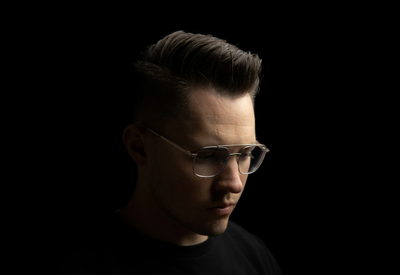
How does a quiff differ from a pompadour, and why the names?
A pompadour sweeps the whole top up off the forehead and back over the crown in one smooth, high roll. A quiff keeps its height at the front only: the top is shorter, looser and textured, and the lifted front tips forward or to one side instead of reaching back. Length follows from that. Wahl, the clipper maker, asks for at least 7.5 cm, on top for a pompadour, and the haircut site Buzzcutting gives 7 to 12 cm, while it puts a quiff at 5 to 8 cm at the front. The two names come from different places. The pompadour is named after Madame de Pompadour (1721 to 1764), mistress of Louis XV of France, though English Wikipedia points out that she wore her hair low and swept back and that the name was coined in the 20th century. Women wore high, swept-up versions in the 1890s; the men's version belongs to the 1950s, when Elvis Presley, James Dean and Johnny Cash wore it set with Brylcreem or pomade. The quiff was a staple of the British Teddy Boys in the same decade. Its etymology is uncertain: it may come from the French coiffe or the Dutch kuif, a crest, which is why Tintin, who wears one, is called Kuifje in Dutch. Guides still disagree on the details, and some call a short pompadour a quiff, so a photo tells the barber more than the word does.
The cut under each style starts with the length on top
Under both styles the barber starts from the same base: the sides and back taken short with a taper or a low, mid or high fade, usually somewhere between skin and a number 3 guard, about 10 mm. The difference sits on top. For a pompadour the length is kept all the way back, because the front has to stand up and still reach over the crown; Buzzcutting splits it into a front of 8 to 12 cm, a middle of 7 to 10 cm and a crown of 5 to 8 cm, so the sweep tapers down at the back. For a quiff the front is left longest at 6 to 8 cm, the middle runs 5 to 7 cm and is cut with texture, and the crown drops to 4 to 6 cm. The Canadian barber school CADMEN puts the logic in one line: a pompadour cut protects length that can go back, a quiff cut protects length at the front. Neither holds with heavy bulk left in the top, so the barber usually takes weight out with scissors or point cutting to let the roots lift. Barbers often find that a cowlick at the hairline decides more than the photo: hair that grows forward helps a quiff and fights a pompadour. Bring a photo from the front and one from the side: the profile shows whether the roll travels back or the front points forward. At 044 Barbershop in Kyiv you can book styling, a wash and style, after the cut and watch which way the dryer sends the front before you try it at home. Both shapes blur as the top grows, and the guides suggest a trim every three to four weeks.
Set the direction with the dryer, then pick the product
Styling starts with direction, and the dryer sets it before any product goes in. Towel-dry until the hair is damp rather than wet; CADMEN suggests about 70 to 80 per cent dry. For a quiff, aim the dryer from behind the front section, lift the roots up and forward with a brush or your fingers, and hold the shape for 15 to 20 seconds while it cools. For a pompadour, dry the front up and then back over the crown, comb the sides back and let the top cool in place. Our blow-dry guide covers heat and distance in detail. Product follows the finish. A classic pompadour wants a strong, shiny pomade, often with hairspray on top, and a modern matte one takes clay or paste. Clay is the usual choice for a quiff, and a shiny pomade turns it sleeker and more formal. If you don't want to style every morning, ask for a short textured quiff: about 4 to 5 cm at the front, point-cut so the ends break up, with a mid fade at the sides. Rub a pea of clay between your palms, push the front up with your fingers and leave it a little messy. Buzzcutting calls the quiff forgiving on mornings you run late, and the same guide warns that a front over 10 cm tends to collapse instead of holding the lift. Below about 4 cm there is nothing left to lift, and the cut becomes a textured crop. Sit in the chair with your top still long, and the barber can show on your own hair whether it wants to rise into a quiff or reach back into a pompadour.