Side part haircut: what it is and how to ask for it
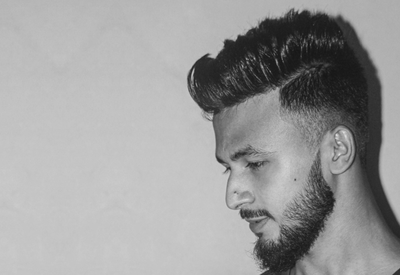
What makes a haircut a side part?
A side part is short sides, a longer top and one off-centre line that the top is combed away from. The line gives the cut its identity: two men can have identical clipper lengths and only one of them will have a side part. On top the length usually runs from about 5 to 10 cm, which is enough for the hair to lie over and hold a direction. For decades after the Second World War this was the standard office haircut, and it still looks at home with a suit. Your hair suggests where the line goes. To find your natural parting, comb damp hair straight back, then push it gently forward from the crown, and it will split by itself where the growth wants to divide. The barber then usually places the part above the outer end of the eyebrow or the outer corner of the eye. Set lower, towards the ear, the hair has to be dragged across the whole head and starts to slide. Set higher, towards the centre, the cut begins to look like a middle parting. If you have combed to one side all your life, run this test before you commit to it, because a line cut against the growth lifts into a ridge by lunchtime and no product holds it down for long. Growth direction matters more here than the side you happen to prefer, and a well-placed part mostly stays put by itself.
Hard or soft line, taper or fade
The line comes in two versions. A soft part is only combed: brush it another way and it is gone, which suits an office, a wedding or a first attempt at the cut. A hard part is a thin line shaved down to the scalp, visible from across the room and reliable on a rushed morning. You pay for that in upkeep, because a shaved line grows in quickly and soon looks more like a scratch. On fine or thinning hair the strip also draws attention to the scalp, so barbers often suggest the soft version there. The sides are a separate decision. A taper shortens gradually and leaves some hair at the temple and neckline, which keeps the cut close to its classic form. A fade runs down to skin, looks sharper and shows regrowth sooner. Barbers use both words loosely, so point at your temple and neck when you say them. Face shape adjusts the top: a round face gains from some height at the front, a long face from a flatter top that adds no extra length. At 044 Barbershop in Kyiv all of this gets settled during the haircut. The barber usually checks the line on dry hair, since damp hair lies flat on anyone and a crown swirl only shows itself after drying. If that swirl keeps opening the hair at the back, a little more length is often left there. Mention it if you know you have one.
Tell the barber four things, then style it this way
Ask with four facts: the length on top, how short the sides go, hard or soft part, and which side. Saying 7 cm on top, tapered sides, soft part on the left gives a barber far more than the word classic, though a photo never hurts. Styling takes a few minutes. Comb through towel-dried hair, draw the line with the tail of the comb, then blow-dry the hair in the direction it will lie. Pomade gives shine and the traditional look, clay or paste a matte finish, and a cream suits fine hair. Barbers disagree on whether product goes on damp or dry hair, so start on dry with a small amount, since too much at the roots turns the part into a greasy stripe. If the line blurs by midday, dry the hair more thoroughly next time before reaching for more product, since the direction of drying does most of the holding. The sides and edges lose their shape first, while the top looks respectable for much longer, and that is how men convince themselves a cut is holding when the neck and temples have already grown over. Hair grows about 1 cm a month, and on a short taper that shows fast, so to keep the shape come in every one to two weeks. Bring the part you have always worn to our chair, and the barber will comb it out at the mirror and show you where your line lies by itself.