Taper vs Fade: What Differs and How Long Each One Lasts
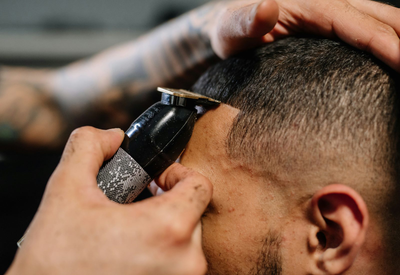
Where does the short part start, and where does it end?
A taper shortens the hair gradually toward the neckline and sideburns and stops at a length you can still see; a fade goes much shorter, often to bare skin, and covers more of the side of the head. The rest comes down to two questions: where the blend starts and where it ends. "Taper fade" sits between the two. Barber guides note that the term grew out of people using both words as synonyms, and most barbers hear it as either a taper or a very low fade, so if you use it, add what you mean. The second question is how long the cut stays tidy, and here the two behave alike. Scalp hair grows about a centimetre a month, roughly a third of a millimetre a day, and what differs is how much of that growth shows. That figure is an average, so your own neckline is a better clock than the calendar. Three millimetres on bare skin turn a clean edge into a shadow within days. The same three millimetres on an edge that was left at six or ten barely change the picture, because the contrast between the bottom and the top is still there. So the shorter the bottom and the higher the blend starts, the sooner the cut looks tired. A fade also leans on the top for its effect: the more length you keep up there, the shorter the sides read. A fade is the sharper tool and wants a short interval, while a taper is the quiet option that forgives a busy month.
How long a taper holds, and how long a fade does
For planning, think in these ranges. A skin or high fade is at its best for about a week and has softened by the second. A low or mid blend that keeps a few millimetres at the bottom holds for roughly three weeks. A plain taper at the neck and temples, with the sides left longer, can go four weeks or a little more before anyone notices. They also grow out differently. A fade fills in as a band: the line above the ears blurs first, and the dark shadow of stubble on the skin creeps upward until no bare patch is left. A taper loses its neckline first and the sides slowly widen, which reads as the cut getting heavier rather than worse. From behind, a taper shows what a fade hides, the shape of the neck. A rounded neckline softens as it grows, while a squared one shows every extra millimetre, which is why a barber can pick the neckline to suit your schedule. In the chair the confusion is rarely about words. A client says taper fade and points at the temple in the mirror, and the barber has to find out whether that means a finger above the ear or the line where the sides meet the top. The fastest answer is to touch the exact spot on your own head. At 044 Barbershop in Kyiv a machine haircut is built from two guard lengths plus an edged or faded outline, so the outline is what you choose between a taper and a fade, and the guards decide how much hair stays at the bottom.
Tell your barber the height and the bottom length
Choose by your calendar, not by the photo. If you see a barber every two to three weeks, a fade stays sharp and its contrast is the point of the cut. If your interval is five or six weeks, ask for a taper, or a low fade with a few millimetres left at the bottom, and it will still look planned on the last day. When you ask, give three things: how high the blend starts (low by the ear, mid at the temple, high above it), how short it ends (bare skin or a guard number) and what stays on top. If you are unsure, start lower. A barber can take a blend higher next time, but cannot bring it back down. Bring one photo from the side and one from the back, because the back decides how the neckline looks as it grows. With a beard, say so, since the sideburn and the beard have to meet somewhere. The top changes how all of this reads. A long, swept-back top against a skin fade is a strong contrast, while the same fade under a short crop looks quieter, so decide the sides and the top together. For the least upkeep, ask for the neckline to follow your own hairline instead of a drawn block line, since a natural edge grows out the softest. Come in with the photos and the barber can show you in the mirror where that blend would start on your own head, which no picture of someone else's head tells you.