Peaky Blinders haircut: its name and what to tell the barber
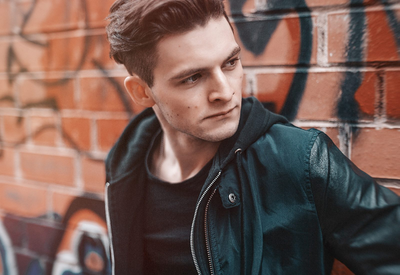
What is the Peaky Blinders cut called in the chair?
The Peaky Blinders haircut is a disconnected undercut: the sides and back go very short with clippers, high up the head, and the top stays long and is combed back or to the side, with no blend between the two. Those two words are what to say in the chair. The sides usually go to a 3 or 6 mm guard, or shorter, down to 1.5 mm or bare skin for the hardest version seen on screen. The line where short meets long sits high, often around the widest part of the head, so from the side the top looks like a cap of hair over almost bare temples. The top runs to roughly 10 to 15 cm, enough to comb back and hold with product, or to drop forward over the forehead. Disconnected is the word that matters. In a fade the clipper length climbs gradually into the top; here it stops at a hard step, and the long hair hangs over it. The cut takes its name from Peaky Blinders, the British crime drama Steven Knight created for the BBC. It premiered in September 2013, and its first series opens in Birmingham in 1919, just after the First World War. Ask for it by the show's title and most barbers will know the silhouette, though the guard length and the height of the line still need saying out loud, since a still from the series rarely shows the back of the head.
The real gang wore a cropped head and a long forelock
The screen look borrows the mood of a real gang more than its haircut. The Peaky Blinders were a Birmingham street gang of young men from working-class streets, active from the late 19th century until the 1920s, when a rival gang took over the city. A Birmingham witness quoted by Smithsonian magazine described the typical member's hair as 'prison cropped' all over, except for a long quiff in front plastered down at an angle across the forehead. A Warwickshire word list from the same years mentions a 'donkey-fringe' under a hat pulled low over one eye, and Birmingham historian Carl Chinn describes the same cropped hair with a fringe brushed to one side. So the original sat closer to a short crop with a forelock than to the slicked-back top on television. The famous story that the gang sewed razor blades into the peaks of their caps is disputed. Chinn calls it a romantic notion from John Douglas's novel A Walk Down Summer Lane, and points out that disposable blades were new at the time and far too costly for lads from the slums. The name more likely came from the peaked caps themselves, or from 'blinder', local slang for someone sharply dressed. Under a flat cap only the clipped sides and the back of the head show, so the whole shape of the cut depends on the line at the back.
Bring a photo of the back as well as the side
Ask in parts. Say disconnected undercut, then give the guard for the sides and back, 3 mm for a softer version or shorter for the screen look, and say whether the line runs level round the head or drops lower at the back. Name the top length in centimetres and how you will wear it: combed straight back, swept to the side over a parting, or dropped forward. Bring a photo of the back as well as the side, because a top combed back has to cover the step. Barbers often find the shape of the head makes the decision: bare sides show every bump and scar behind the ear, so the barber usually runs the clippers on a longer guard first and goes shorter only once you have both seen the result. Straight, thick hair holds a swept-back top best, while fine hair lies flatter and lets the line show through, so a lower line suits it. At 044 Barbershop in Kyiv you can book a haircut and ask for the height of the step to be set first, with the top cut to match it. Style the top on towel-dried hair: comb it back and set it with pomade, a shiny water-based one for the look from the series. Very short sides show regrowth within days and the hard step softens in a week or two, so barbers recommend coming in every one to two weeks. Come in with both photos, and the barber will set the line where your own top covers it when combed back.