Ivy League haircut: what it is and how to ask for it
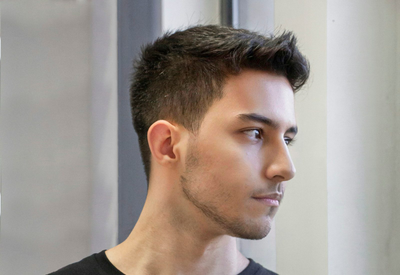
A crew cut with enough front to take a side part
An Ivy League haircut is a short men's cut from the crew cut family, with enough length at the front to take a side part. The top gets gradually shorter from forehead to crown, and the sides and nape taper down to a short length. It goes by a few names, including Harvard clip and Princeton cut, and all of them point to American universities. Accounts of who started it differ. The test is simple: long enough at the front to part, short enough that you barely need a comb. That test still separates it from its nearest neighbours. A classic crew cut is usually too short at the front to lie over to one side. A comb-over carries a long top across the whole head, often with a high-contrast fade. The Ivy League stays soft in its contrast and never gets heavy on top. In the chair, it often suits men who have outgrown a crew cut and still want to spend almost no time on their hair in the morning. It looks neat at the office and at the weekend, because it stays short even on the days you skip styling altogether. Thick, straight hair gives the clearest version of the shape, since the top holds its line with little or no product. In a photo it is easy to mistake for a short taper, and the giveaway is the top line falling from forehead to crown.
How much length should stay at the front?
Barbers usually keep about 4 to 6 cm at the front and roughly 2 cm at the crown, with sides tapered so they run into the neck without a step. The difference between forehead and crown is what makes the cut recognisable. Make the top one length all over and you get an ordinary short cut with a part, and the grading disappears. Barbers often cut the top with scissors over comb, or with a clipper and several guards, and blur the join with the sides so the top does not sit there like a separate cap. At 044 Barbershop in Kyiv you can book this as a standard haircut, and it helps to describe the shape in words, because clients and barbers often understand the name differently. Say how much to keep above the forehead, whether the hair should lie to one side, and how short the temples should go. A high forehead usually calls for a little more length at the front. If the temples have started to recede, a barber will often suggest a shorter front edge, since a long strand there draws the eye to them. Show which way you comb your hair at home, as the front length gets shaped around that movement. Curly hair needs extra margin, because it springs up at the front and looks shorter than it measures. If you want a sharper line, ask for a shaved part separately.
Comb it to the side and keep the shape
Styling takes about a minute. Comb damp hair to one side, then work a little matt cream or light paste through with your fingertips, moving from crown to forehead. You need very little: at this length, too much sticks strands together and adds a shine the shape does not need. A hairdryer can lift the front edge if you want more volume, though a comb is often enough for an ordinary day. The shape is easy to fix with your fingers later on, since the top is too short to fall apart. Dry hair barely follows the comb, so wet it first thing, even if only with water. If you have a whorl at the crown, the barber will usually leave a little more length there, as hair cut too short will stick up. The edges go first. Hair grows about 1 cm a month, so a few millimetres show on the temples while the top still looks fresh, and within a few weeks the difference between forehead and crown that holds the shape has gone as well. Barbers therefore suggest coming in every one to two weeks to keep temples, neck and grading crisp. If you decide to grow the top out, this shape converts easily into a short cut with a part: tell the barber, and they will leave a little more on the crown each time. Bring a photo of the front you like to our chair, and the barber will show on your own hair how much length a side part needs to fall into place by itself.