Comb-over haircut: what it is and how to ask a barber for it
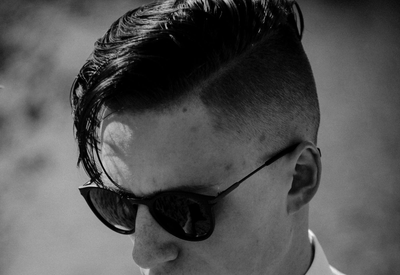
How a comb-over differs from a plain side part
Many men hear comb-over and picture long strands over a bald patch, but it is a haircut with a top left long enough to sweep across to one side from a part, and short sides taken down with a taper or fade. Contrast is what separates it from a plain side part: the top lies across the head as one mass while the temples almost disappear. It differs from a slick-back in direction, since a slick-back runs to the rear and a comb-over mostly runs sideways. That old meaning stuck for decades. The modern cut hides nothing, because the top has normal density and the length is there only to give it direction. Searches for a comb-over fade or a side-swept comb-over describe the same base, with different fade heights and a softer or sharper part. It works well because it looks right in an office and on a day off, and the sides can be as gentle or as sharp as you like. It sits most easily on straight or slightly wavy hair of medium thickness. Very curly hair will not lie flat on top, so ask for a more textured version instead. Barbers often notice that a client already wears something close to it without the shape: an overgrown top falling to one side, and sides that have lost their line. Clean sides and the right part usually turn that growth into a proper comb-over.
Tell the barber these three things
Show the barber a photo, then agree three things out loud. The first is the fade: name the height, low, mid or high, and how short it goes at the bottom, from a soft taper to a skin fade on bare skin. The second is the length on top. The barber usually checks there is enough for the hair to lie across without sticking up, and thick hair often needs thinning out so the top does not sit like a cap. The third is the part. A soft part is a natural line made with a comb, while a hard part is shaved in with a blade or clipper and needs refreshing more often. Which side it goes on matters more than people expect. The hair at the crown already has a direction, and the part usually goes where the hair wants to divide, because a style fighting a cowlick rarely lasts until lunch. Barbers often check this on dry hair before picking up the scissors. At 044 Barbershop in Kyiv you can simply raise all this during a haircut: say how long you are willing to spend in the morning, and the contrast on the sides follows from that. If your hairline is receding or the hair is thinning, avoid asking for a longer top. A shorter top with texture often looks denser, and long strands over a sparse area bring back the old comb-over everyone wants to avoid. Mention it before the first cut.
How do you style it, and when do the sides need a tidy?
Styling starts with damp hair. Blow-dry it in the direction you comb, lifting the roots at the front, then work a little product through your palms and go from the back of the top towards the hairline. Pomade gives shine and a firm direction, while a matte paste looks more natural and tends to behave better on fine hair. Start with less product than you think. You only need the comb for the part and for setting the shape, since extra passes flatten the top. The usual mistake is putting product on wet hair and combing straight away, and an hour later the front falls back. Hair grows about a centimetre a month, and a comb-over feels that first on the sides: the fade loses contrast within a week or two, and a hard part grows out sooner still. That is why barbers recommend coming in every one to two weeks to keep the shape, even when the top still lies well. At home you can only restyle what is there, and you cannot correct the line on the sides, because the back of your head barely shows in a mirror. Before your next visit, take a photo of how the top sits on an ordinary day, as that tells the barber more than a description. Come in if you want the side and fade height matched to your hair: the barber will show you where the top falls by itself before the first cut.