Buzz Cut: Which Guard Number to Ask For and Who It Suits
How many millimetres does a number 3 actually leave?
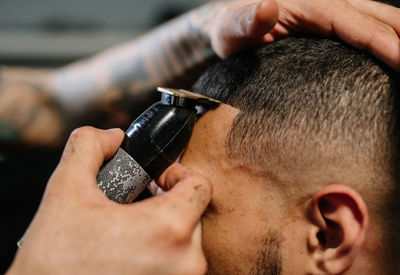
A buzz cut is hair clipped to one short length all over the head, and you order it by guard number. On a standard guard each whole number adds about 3 mm: a number 1 leaves 3 mm, a 2 leaves 6 mm, a 3 about 10 mm, a 4 about 13 mm, and an 8, the longest guard in most kits, about 25 mm. Below the 1 come the half guard at 1.5 mm and the bare blade, which leaves half a millimetre to a millimetre and is what Ukrainians call 'under zero'. Watch the word 'three' in Kyiv. In Ukrainian salon speech a cut 'under 3' usually means a 3 mm guard, while a barber working with numbered guards hears a number 3, which is 10 mm, more than three times longer. Brands also vary by a fraction of a millimetre, so give the length in millimetres or read the figure printed on the guard. Short buzz cuts run from the bare blade to a 2 and show the scalp; a long buzz, a 5 to an 8, lies soft and flat. For a first buzz a 3 is the safe start: it shows hair colour instead of shadow and softens the outline of the skull, and going one number shorter next time takes minutes, while growing back takes weeks.
Check the back of your head before the hairline
Whether it suits you depends on the skull more than the face, because a buzz removes the hair that usually hides it. Before the first one, wet your hair, press it flat and look at your head from the side and from behind, in two mirrors or on phone photos. A flat back of the head starts to show at a number 2 or shorter, small bumps and dents appear at a 1 under direct light, and an old scar that a few centimetres of hair kept hidden is plain at 3 mm. None of that rules the cut out, since a 4 covers most of what a 1 exposes. Square and oval faces carry a buzz with no help. A round face gains a little height from a top one guard longer than the sides, and a jaw from a beard; a long face looks better with the sides left on the same guard as the top. A receding hairline is a common reason men buzz in the first place: one short length lowers the contrast between hair and scalp that makes thinning visible, though it changes how thinning looks and does nothing about the cause. A buzz with a fade keeps the top on one guard and steps the sides down to skin. The gradient needs at least two guard steps to show, so the top should be a 2 or longer: a 3 on top, say, then a 2, a 1 and skin. At 044 Barbershop in Kyiv the machine haircut uses two guard lengths and a faded outline, so the top and the sides can sit on different guards in one visit.
Re-buzz every week or two and keep a hat handy
Hair grows about a centimetre a month, roughly 2.5 mm a week, so a buzz changes fast. A 3 mm cut doubles in about ten days, while a 10 mm buzz gains the same few millimetres and still looks close to the day it was cut. Barbers recommend a re-buzz every one to two weeks: weekly for a number 1 or a skin fade, where stubble shows on bare skin within days, every two weeks for a 3 or a 4. A home pass with the same guard over the top does not replace the visit every week or two, which keeps the outline sharp. The neckline and the faded sides lose their shape first, and the barber usually resets those. A short buzz also leaves the scalp and ears exposed. Cleveland Clinic calls hair only so-so protection against the sun and notes that the scalp faces it directly. Its dermatologist names a broad-brimmed hat as the most effective cover; without one, use a broad-spectrum, water-resistant sunscreen of SPF 30 or more, 15 minutes before going out and again every two hours, and a gel spreads more easily through stubble. The same page lists the ears as the third most common site of skin cancer, so they need it too. In a Kyiv winter the risk turns around: the NHS says frostbite can set in at 0°C or below, lists the ears among the parts it most often affects, and advises a hat and scarf. Come in before your first buzz and talk the guard through with the barber, so you pick a length you will be happy to wear week after week.