Men's Skincare Basics: Cleanser, Moisturiser and Sunscreen
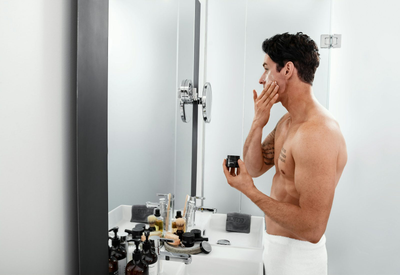
Reading your skin type first, then choosing a gentle cleanser
Men's skin is thicker than women's and makes more sebum, but it needs the same three things: cleansing, moisture and protection from the sun. Start by learning your skin type, which takes an hour and costs nothing. Wash your face with plain water, put nothing on it and look in the mirror an hour later. Shine all over means oily skin. Shine on the forehead and nose only means combination skin. A tight feeling or flaking means dry skin, and if most products sting or turn your face red, treat it as sensitive whatever else you see. Repeat the test in another season: skin that is oily in July can turn combination or dry once the heating comes on. Bar soap is too alkaline for the face and shower gel too harsh, and both dry it out, so buy a face wash with a pH between 5 and 5.5: a gel for oily skin, a cream or a milk for dry. Cleanse in the evening, when the day's dirt, sweat and sunscreen sit on your face. In the morning plain water is enough for dry skin, and oily skin can take a second wash. Use lukewarm water. Hot water feels good in the Kyiv cold and pulls the oil out of your skin, so by lunchtime your face feels tight and starts to flake. Pat your face dry with a clean towel and change it every few days, since a damp towel hanging in the bathroom collects bacteria.
Moisturiser and daily SPF, including the grey months in Kyiv
Apply moisturiser after washing, while the skin is still slightly damp, so it locks that water in. Oily skin needs a moisturiser too, because cleansing removes water along with the oil. Pick a light gel or fluid labelled non-comedogenic, which means it won't clog pores. Dry skin takes a thicker cream. In Kyiv the heating season runs from October to April and dries the air in every flat and office, so in those months even oily skin may want a richer texture at night. A pea-sized amount covers the whole face. Sunscreen is the step men skip most often, and it does the most against early wrinkles, dark spots and redness. Ultraviolet light passes through clouds, so a grey November day still counts, and in June and July the UV index in Kyiv reaches 6 or 7. Apply SPF 30 or higher every morning as the last step, or use a moisturiser with SPF to save time. Squeeze out two finger-lengths of sunscreen for the face and neck; a thin smear gives a fraction of the SPF on the label. With a beard, pick a gel or a spray, which spreads through the hair better than a cream. Cover the ears, the back of the neck and the hairline. After a short haircut, the skin that the hair used to cover burns first. Spending the day outside? Reapply every two hours, and wash it off in the evening.
Shaving days, the skin under the beard and when to see a doctor
A razor takes off a thin layer of skin along with the hair, so shaving days call for a gentler routine. Shave after a shower, when warm water has softened the hair, and put in a new blade every week if you shave daily, since a dull blade drags across the skin. Skip scrubs and acids that day, use an alcohol-free balm or your usual moisturiser, and hold off on sunscreen until any stinging stops. Exfoliate once or twice a week on days you don't shave: salicylic acid (BHA) suits oily skin and helps with ingrown hairs, and lactic acid suits dry skin. The skin under the beard gets the least attention of all. Beard flakes come from that skin, so wash the beard two or three times a week, rinse it well, and work moisturiser or beard oil down to the skin with your fingertips. During a beard trim the barber sees your skin up close in good light, so ask about any redness or flaking you have noticed. If shaving at home keeps irritating your skin, book a hot-towel shave and watch how the barber prepares your face; you can repeat the same steps at home with a towel soaked in hot water. See a dermatologist, and go early, if acne doesn't improve within two or three months, if redness on the cheeks or nose won't go away, or if a mole changes shape or colour.