Drop fade: what the cut is and who it usually suits
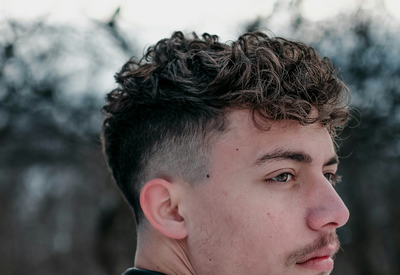
Why the line drops behind the ear
Turn your head at the mirror after an ordinary fade and the line usually runs level, from the temple straight round to the back of the head. A drop fade bends that line: it curves down behind the ear and carries on toward the nape, following the round of the skull. That bend is the whole difference, and it gives the cut a softer look from the side. A level line crosses the widest part of the back of the head and can make it look boxy, while the curve travels around that area. It is usually confused with a burst fade, because both curve near the ear. A burst stops behind the ear and leaves the back long, while a drop fade continues right around the head and takes the back short. If you want to keep length at the nape, this is the wrong cut to ask for. The starting point can be low, mid or high, and a low drop fade is the gentlest of the three. The depth of the bend varies as well, with some barbers keeping it barely visible and others making it a feature of the cut. On top, you will often see it with a crop, a textured top, a fringe or curtains. From the front the bend is hardly visible at all, so always judge the cut from the side and slightly behind. A phone photo taken from behind by a friend shows the curve better than any mirror.
Who a drop fade usually suits best
No face-shape chart settles this, so start from the shape of your own head. Barbers often suggest a curved line if the bone at the back of your head stands out, as the curve travels around that bump and a level line would draw attention to it. On a square face, the softer outline behind the ear usually looks calmer too. For a first fade, the low version is a comfortable start, since the temples and crown stay almost as they were and the length falls away gradually. If the hair at your crown is thinning, the barber will often suggest a low start, because a high short zone sharpens the contrast with the top. Thick and curly hair holds the bend well, while on fine, straight hair a shallower curve tends to look cleaner. Glasses deserve a thought: the arms sit behind the ear right where the line bends, so put them on for the final check. If you wear a helmet or a hat most days, say so early, as it flattens the hair above the line and changes how the top sits. When in doubt, try the low version first, because the line can go higher next time but cannot come down straight away. On a long neck, a lower bend usually looks more natural. A cowlick at the nape can push hair against the curve, so the barber usually plans the line around it from the start.
Check both sides while you are still in the chair
Faces are rarely symmetrical and ears rarely sit at the same height, so the most common problem with this cut is a different bend on each side. A line taken from the ear copies that difference, which is why the barber usually works from the shape of the head and compares the two sides. Before you stand up, look at both sides in the hand mirror and speak up if one curve looks deeper. Your request shapes the result as well: name the starting height, say how short to go at the bottom, down to the skin or to a 1 or 2 mm guard, and whether you want a deep bend. Say too whether the neckline should be rounded or natural, since it finishes the curve. At 044 Barbershop in Kyiv this is a regular haircut, and for a short version without a long top, the machine haircut with two guard lengths and a faded outline fits. Within a week or two the bend behind the ear is the first thing to blur, so to keep the shape, come in every one to two weeks. A home trimmer does little good here, as you can barely see your own work behind the ear and the curve is easy to cut unevenly. You can shave stray neck hairs below the line after a shower, but leave the line itself to the barber. Come in with the cut you have now, and we will find at the mirror where the line should fall on your head.