Mullet, Curtains, Textured Fringe: What to Ask Your Barber
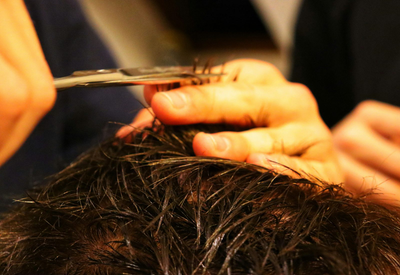
How do you ask for a modern mullet and get one?
Ask for short sides, a back that reaches the collar, and a clear word on how the two meet: a visible line, or a blend. That sentence separates a modern mullet from the eighties original, and a barber can work from it. Decide the join first. A disconnected mullet keeps a hard step between the short sides and the long back; a flow mullet melts the sides into the length so the eye finds no edge. Say which one, and name a guard number for the sides if you know it, for example a two fading up into a four. If you do not know the numbers, "short but not skin" is enough to start. Describe the top by the result you want: "texture and volume at the crown" tells the barber more than "take an inch off". Hair type decides how much back you can ask for. Thick straight hair carries length easily, while fine hair goes stringy at the ends, so keep the back shorter and the shape tidier. Curly and wavy hair suits a mullet well, but curls spring up as they dry, so ask the barber to check the back dry, and keep the sides at a low taper rather than a skin fade, because curls need room beside the ears. On short hair, ask for the short version: a top you can lift with your fingers and a back that only just touches the collar. Expect to return every four to six weeks, since the sides lose their edge in about three weeks and the back keeps growing.
Curtains need a middle part and enough length to fall
Curtains are a middle part with a fringe that falls to each side, so the request has two measurements: how long the fringe is, and how the sides finish. Give the fringe length against your own face: at the eyebrows, at the cheekbone, or somewhere between. A fringe cut too short has no weight to fall, so say that the top must stay long enough to part and drop, and that the sides and back can be tidied while it grows. For the sides, choose a taper, a fade or a scissor cut to the ear, and say whether they should connect to the top. Straight and wavy hair fall into curtains easily. Fine hair needs a little extra length on top and light product, or it lies flat; thick hair needs bulk taken out through the cut, not buried under more product. The part deserves one question of its own. A hairline or a front cowlick that pulls to one side will fight a ruler-straight centre line, and the fringe will split somewhere else by lunchtime. At 044 Barbershop in Kyiv the barber can look at your hair dry, see where the part falls by itself and cut the fringe from that point. A part set slightly off centre, where the hair wants it, looks better than a perfect line that collapses. Style it on damp hair: find the part with a comb or your fingers, then dry the fringe away from the face.
Ask for a textured fringe, then keep it light at home
A textured fringe is a short or medium top whose front is cut in pieces instead of one straight edge. Ask for the fringe at a set length, such as the eyebrows or just above them, cut with the points of the scissors so the ends break into separate strands, and say which way it goes: forward, or swept to one side. Straight hair of medium to thick density holds this shape best. Wavy hair gives texture for free and needs less cutting into. Fine hair needs a lighter hand, because too much texturising leaves the fringe see-through, so ask for the ends to be broken up while the weight stays. The fringe is also the first part to look wrong, since it reaches the eyes within a few weeks; plan a visit every four to six weeks, and leave the scissors alone at home, where a fringe tends to end up as a hard line. In the morning, dry it in the direction you want it to sit, then rub a little matte paste or clay between dry fingers and work it through; if your hair is slippery, a sea salt spray on damp hair adds grip first. Use less than you think. The shop offers styling, a wash and style, which shows how the cut sits with product in it. Bring a photo of the fringe you like and sit in the chair: the barber sees the length and the fall from the front and the back at once, and the bathroom mirror cannot do that.