Why Men's Hair Puffs Up After a Wash and How to Calm It
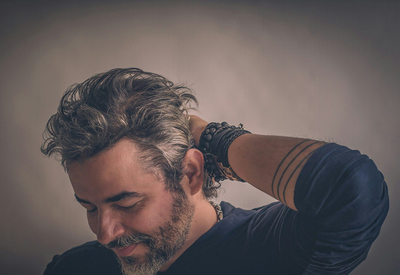
What makes straight hair puff up once it is washed?
Hair puffs up after washing when the outer layer of each strand, the cuticle, stops lying flat. The cuticle is a sheet of overlapping scales that sit like roof tiles on a smooth hair; once they lift, the strand turns rough, catches on its neighbours and takes up water from the air unevenly, so the hairs bend in different directions. Cleveland Clinic names two everyday triggers: hot water, under which hair swells and the cuticle starts to lift, and plain dryness, which roughens that outer layer and leads to frizz. Your shampoo adds a third. A review of hair cosmetics in the International Journal of Trichology explains that the main cleansing agents in shampoo are anionic and can leave more negative charge on the hair surface, which raises frizz and friction. Hairs carrying the same charge push each other apart, and that is the flyaway, electric look many men get on a dry winter morning. Humidity finishes the job. A laboratory study in the Journal of Cosmetic Science found that hair absorbs more water as the air gets damper and loses elasticity at the same time, which is why a head that looked tidy in the bathroom fluffs up on the walk to the metro in drizzle. Straight hair shows it on top and at the crown, where short ends stand up. A slight wave that nothing holds together breaks up into fuzz all over the head.
Wash in warm water, condition the ends and blot the towel
The fix starts in the shower. Use warm water: Cleveland Clinic suggests a warm shower and warns that hot water can damage hair much as constant blow-drying does. Put the shampoo on your scalp and let the foam run through the lengths as you rinse. The American Academy of Dermatology (AAD) advises this, and the ends, the oldest and driest part of each hair, get only the rinse. Then use conditioner after every wash. For fine or straight hair the AAD says to apply it to the ends, and for dry or curly hair along the whole length. A review in the Indian Journal of Dermatology explains that conditioner carries a positive charge that clings to negatively charged hair, flattens the cuticle scales and cuts static, and damaged hair attracts it even more. After the shower, press the water out with a towel instead of rubbing. The AAD warns that roughly rubbing hair dry can cause damage, and a back-and-forth rub lifts the scales you have just smoothed. If you use a dryer, keep it on low or medium heat with the nozzle pointing down the hair. As for hard water, soap reacts with it and leaves calcium deposits that make hair dull and tangled, but two small laboratory studies reached opposite conclusions on whether it weakens hair, and neither measured frizz. Change your habits before you buy a filter. At 044 Barbershop in Kyiv you can book styling, our wash and style, and see how your hair sits once a barber has dried it along the strand.
A heavier cut with less thinning keeps the fuzz down
Product comes next. Straight hair that frizzes wants smoothing more than hold: a pea of leave-in conditioner or a light cream on towel-dried hair, or one drop of silicone serum spread across the palms and pressed onto the top layer. The same review in the International Journal of Trichology calls silicone the most widely used conditioning agent and says it can re-cement lifted cuticle scales and help protect hair from heat. Matte powder and salt spray do the opposite, roughening the surface on purpose. Then look at the hair itself. Plenty of men discover a wave they never knew they had once the top grows past a few centimetres: cut short it lay flat, and with length it turns to fuzz on a damp day. You have two honest options. Keep it short enough that the wave never forms, or leave enough length for the weight to pull the wave into shape and set it with cream while the hair is still damp. The cut matters as much as the shampoo. Barbers often see a halo of short, frizzy ends over the crown that has nothing to do with washing: thinning shears taken too close to the roots at an earlier cut left short hairs that poke up through the longer ones. On hair that frizzes, the barber usually takes weight out with the scissor points through the ends and checks the shape again once the hair is dry. Sit in our chair with your hair washed the way you wash it at home, and the barber can see where the fuzz starts and cut with that in mind.