Why Does Your Head Hurt After a Haircut? The Usual Causes
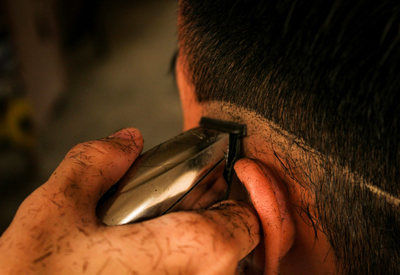
Is it the haircut or the neck?
Most often the neck is to blame, not the cut. In the chair you hold your head almost still for a long stretch, usually tilted forward, and the muscles of the neck and scalp tighten. That is the usual route to a tension-type headache: a dull pressure like a band around the head, with an aching scalp, neck and shoulders. The NHS says poor posture tenses the upper back, neck and shoulders and can bring on a headache, and that staying in one position for long stretches has the same effect. Cleveland Clinic adds stress, eye strain and lack of sleep to the list, so a headache you notice in the chair may have been waiting since the morning. None of the medical pages we read names the cutting of hair itself as a cause. Behind the chair a barber sees what the client does not feel: the shoulders creep up towards the ears and the chin pushes forward the moment someone tries to sit very still. Drop your shoulders, lean back into the seat and move your head when you need to; the NHS advice is to avoid staying in one position for long. Touch can hurt too. Allodynia is pain from things that normally do not hurt, such as brushing your hair, and Cleveland Clinic describes it as a symptom of several conditions, migraine among them. If your scalp is tender to the touch while you also have a headache, the haircut may simply have been the first thing to touch it.
What about the wash basin, a tight cap or a bare scalp?
The wash basin deserves a paragraph of its own. Tipping the head back over a basin bends the neck backwards. In a 2002 study of 25 volunteers who had felt dizzy at salon sinks, neck pain and dizziness appeared in exactly that position and came on significantly less often when a support was added under the neck. In very rare cases a long, hard backward bend of the neck is linked to a squeezed or torn artery there, and a stroke can follow; the literature calls it beauty parlour stroke syndrome, and a 2025 review found 54 such cases, with dizziness, loss of balance and headache among the common signs. The risk is small, so keep the wash if you want it. If you have felt dizzy at a salon sink before, or your neck is stiff that day, say so before you lean back, because the authors of the study advise caution for people with that history. At 044 Barbershop in Kyiv, when the visit includes a wash and style, the barber usually asks you to speak up as soon as the neck rest or the angle at the basin feels wrong, and changes the position. Pressure is the other cause worth ruling out. A tight cap, a helmet, a headband, glasses frames or earphones can produce a pressing headache where they sit, and a tight ponytail or braid a pulling one. A 2024 review in Brain and Behavior says such headaches usually ease within an hour of removing the cause, and in a few people last up to five days. Take a cap off as soon as it starts to press.
Tell the barber, and know when to see a doctor
A very short cut or a head shave leaves more skin bare. Cleveland Clinic warns that the top of the head is vulnerable to sunburn when the scalp is exposed, and suggests a product with SPF 30 or higher, or a wide-brimmed hat. The nape has its own risk: DermNet lists very short haircuts, close shaving and friction from collars among the contributors to folliculitis keloidalis nuchae, small itchy bumps at the back of the head that mostly affect men with dark curly hair. Bumps that stay or grow are a matter for a dermatologist. For an occasional tension headache, Cleveland Clinic lists massage, relaxation and ordinary pain relievers, used on no more than 10 days a month. Some signs call for a doctor straight away. Call an ambulance if the headache starts very suddenly, if it comes with a stiff neck or a high fever, with numbness or weakness in the face or body, or with loss of vision; the same goes for sudden spinning dizziness after the head has been tipped back. See a doctor as well if headaches keep coming back, do not ease with simple self-care or feel different from your usual ones. Come to us for a haircut and tell the barber at the start if your neck is stiff or your scalp is tender: from behind the chair they can see how you sit, and they can change the position of your head and the pace to suit you.