Hot-towel shave: what actually happens in the barber's chair
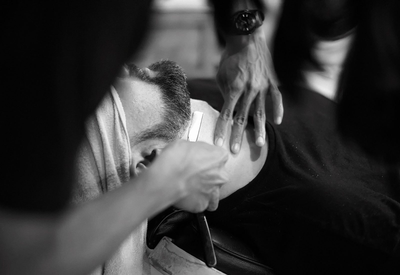
What is the hot towel for?
Most people assume the hot towel at a barbershop is there for the mood, yet its job is preparing the hair for the blade. A hot-towel shave is a full shave of the face or head in which heat and moisture soften the stubble before the razor touches it. The American Academy of Dermatology gives the same advice for home: a warm, damp cloth or the end of a shower softens the hairs, so they cut more easily. The relaxing part comes as a bonus. A second common mistake is to arrive with a face shaved perfectly the day before, in the hope of looking tidy. A barber usually finds a few days of stubble easier to work with, since the direction of growth is visible and the blade has something to take. The third misunderstanding concerns beards. A hot-towel shave need not leave you bare-faced, because the barber can often shave only the cheeks and neck and leave the beard, which gives far cleaner edges than a trimmer. Decide before you sit down whether the beard stays or goes, as that shapes the whole job. If you shave at home every day and your skin has grown used to irritation, one of these shows you the gap between a quick pass over the sink and work done by someone who can see your face from the side and under proper light. Many men book one simply to find that out.
Step by step, from the towel to the balm
The order varies a little between barbers, though the basics rarely change. The chair goes back and a hot, damp towel covers the face, leaving the nose free. Some barbers swap in a second towel when the first cools. It stays on for as long as your skin is comfortable, and then a pre-shave oil often goes on, followed by warm lather worked in with a brush, which also lifts the hairs. The first pass follows the direction of hair growth. The American Academy of Dermatology recommends this direction because it helps prevent bumps and razor burn, and it advises rinsing the blade after each swipe. Neck hair often grows several ways, so an experienced barber runs their fingers over it before picking up the blade. More lather follows and, if your skin allows, a second pass. A cool, damp towel and an aftershave balm finish the job. At 044 Barbershop in Kyiv a face or head shave with a hot towel is its own service, and a towel can also feature in a beard trim, which combines modelling with a dry or hot-towel shave. Lie still and hold off talking while the blade is near your neck, since that helps the barber keep the skin taut. If your face feels sore or your neck itches, say so before anything starts, because a barber can adjust the plan only when they know.
Warn the barber about sensitive skin or rosacea
Heat does not suit everyone. The NHS and the British Association of Dermatologists both list hot and cold temperatures among the triggers for rosacea, so if you have it, warn the barber before the towel appears: they can lower the heat or skip it. The same goes for fresh sunburn, inflamed spots or ingrown hairs on the neck, since a blade only adds irritation there, and it is better to move the shave until the skin settles. If you tend to break out after shaving, say that out loud too. The second pass can be dropped, and a barber has no way of guessing otherwise. At home afterwards, wash with cool water and leave any scrub for another day. Hair comes back every day and a smooth neckline does not last, so barbers recommend coming in for a shave or a beard tidy every one to two weeks to keep the look. Between visits, shave by the same rule, with the growth and after a warm towel, though a home shave does not replace the work of someone who sees your neck from another angle. Keep your own razor blade fresh in the meantime, since a dull one tugs and undoes much of the preparation. Come in and feel the difference for yourself: a hot towel softens the stubble, and the barber takes care of the neck and cheek lines you shave blind at home.