High and tight haircut: what it is and how to ask for it
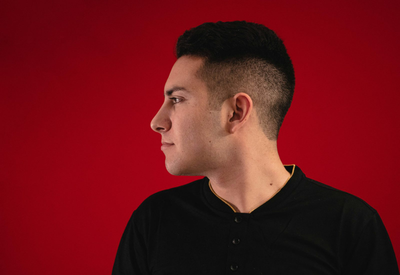
Two different haircuts share the name
A high and tight is an American military haircut with the back and sides clipped very close, about 1.5 mm or down to skin, up to a line above the temples, and a top of only 5-10 mm. English Wikipedia files it as a military variant of the crew cut and the most common cut in the US armed forces, and barbers' guides give much the same numbers. The silhouette makes it easy to spot: a small patch of hair on the crown with almost nothing around it. The name describes the job: the short zone sits high and the clipping runs tight to the head. The trouble is that the name now covers two haircuts. The regulation version has a hard line and a very short top. The barbershop version is a high skin fade with a blended transition and 2.5-5 cm on top, sometimes long enough to comb. Guides use the same three words for both, so a short request can end somewhere you did not expect. There is also the recon, a harder variant with the sides taken higher still and only a narrow strip left on top. If you want the classic shape, ask for it in measurements and bring a photo taken from the side, where the height of the line is visible. A photo from the front barely shows it. That side view also helps you decide how far up you want to go before anyone has picked up a pair of clippers.
How is it different from a buzz, crew cut or high fade?
Three neighbouring cuts get mixed up with this one. A buzz cut has one length all over, so there is no contrast between top and sides. A crew cut has a graduated top that gets longer towards the forehead, and its sides usually come down more softly. A high fade describes only the transition on the sides, and it can sit under any top, long ones included. What defines the high and tight is how far up the short zone climbs and how sharply it meets the top. That exposure has a price. At 1.5 mm or on skin, every bump, scar and flat spot shows, so a barber will often run a hand over the head before deciding where the line stops. Men who have never gone this short rarely know the shape of their own skull, and that is the big surprise of the first time. Your face plays a part as well. Guides say a round face gains from the height, and a long face suits a lower line that stops at the temple. That is stylists' experience more than a rule, so treat it as a starting point. A beard or heavy stubble softens the severity, since it puts weight on the face that the top no longer provides. On thinning hair the sources disagree: some recommend the shape and others warn that sides cut this close draw the eye to a receding hairline, so raise it in the chair, where the barber can see your actual hair.
Give the barber three lengths and one line
Ask in this order. First the bottom: skin, 1.5 mm or 3 mm. Then the top: 6-10 mm for the classic or 2.5-5 cm for the barbershop version. Then the line: above the temple or at the temple. Last, the transition: hard or blended. Numbers in millimetres beat guard numbers, as sizes differ between makers, though a half guard is usually about 1.5 mm, a one about 3 mm, a two about 6 mm and a three about 10 mm. If you are unsure, start at 3 mm and look in the mirror, since going shorter takes minutes and the length takes weeks to come back. Check the height of the line from the side in a second mirror before the transition starts. This cut does not hold its shape for long. Hair grows 2-3 mm a week, so on a 1.5 mm side the bare band is gone in about a week and the hard line starts to blur. See your barber every one to two weeks if you want that clean contrast. At home you can run the same guard over the sides at most, leaving the line and the transition alone, and that never replaces the visit. At the end of the cut, ask which guards were used, so you can name them next time. At 044 Barbershop in Kyiv, the machine haircut covers two guard lengths and an edged or faded outline, which is exactly how this shape is built. Come in, and before the first pass the barber can feel the shape of your head and show you where the line will fall on it.