Wolf cut for men: what it is and how to ask your barber
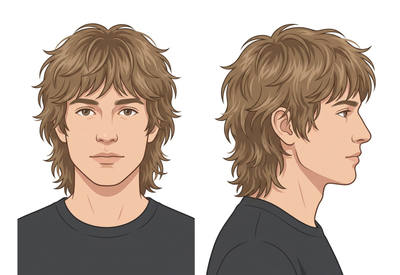
What is a wolf cut, and how is it different from a mullet?
A wolf cut is a layered, medium-length haircut: short, choppy layers sit at the crown, the hair gets longer as it goes down, and the most length stays at the back, past the nape. Stylists describe it as a cross between two older shapes. The 1970s shag gave it the stacked layers and movement, and the mullet gave it the length at the back. The difference from a mullet is the blend. A mullet keeps the top and sides clearly shorter than the back, and you see that contrast at once. In a wolf cut the layers run into each other all the way round the head, so the outline looks softer, as if the hair grew out on its own and still kept a shape. The cut came from South Korea, where K-pop performers wore it in the mid-2000s, and TikTok picked it up in late 2020, when many men were growing their hair out through lockdowns. It has stayed among the youth trends since. The one thing it needs is length to layer. Hair grows about a centimetre a month, so moving from a short fade to a wolf cut takes several months, and on each visit along the way the barber can shape an in-between version so the growing-out stage still looks deliberate.
Straight, wavy or curly: how a wolf cut sits on your hair
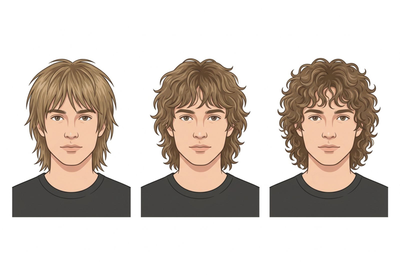
A wolf cut is easiest on wavy hair of medium or thick density. The natural bends split the strands apart, so the layers show without any product. On curls the barber can layer more boldly, because the texture softens every edge. Straight hair works too, but it needs a different approach. Heavy straight hair drags the crown layers flat, so ask for the shortest layers to start higher and for a softer blend between them, or the ends will look like steps. Without product a straight version turns into plain long hair by lunchtime: work a sea salt or texturising spray into damp hair, scrunch it with your fingers and dry it. Fine straight hair is the hardest case. It lies flat and closes the gaps between layers, so the cut uses fewer and lighter layers, and you build the volume at the crown with styling every morning. Choose the length by the time you want to spend on it. A short wolf cut keeps its layers around the ears and ends at the top of the neck, a medium one reaches the collar, and a long one rests on the shoulders, carries more weight and on straight hair is the first to lose its lift. At 044 Barbershop in Kyiv the barber can look at your hair dry and tell you how many layers it will hold before the scissors come out.
Tell your barber three things, then style it with your fingers
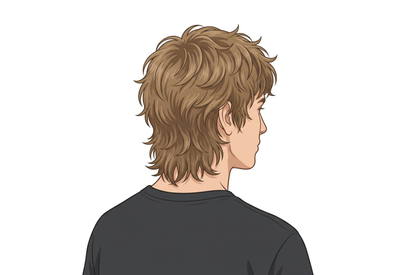
Give your barber three details rather than the single word, because barbers picture different shapes behind it. First, where the shortest layers start. In a wolf cut they sit at the crown, which is where the cut gets its volume. Second, the fringe. A choppy fringe can cover the brows, part into curtains on both sides or stay short above the brows, and that choice decides how much of your face the cut shows. Third, the sides. A short clipper fade at the temples sets up a contrast with the back that pulls the shape towards a mullet; for a classic wolf cut the sides are cut with scissors and left in layers. Bring two or three photos from different angles, ideally of hair like yours. Styling takes a few minutes: spray on damp hair, fingers instead of a comb, a dryer on medium heat, then a little matte paste or clay on the ends. To keep the layers from dropping and the back from turning into shapeless length, barbers recommend tidying the shape every one to two weeks. Come in and the barber will hold up a mirror behind you and adjust the layers to the way your own hair falls.