Shaving Soap and a Brush: How to Build a Proper Lather
Soap or cream: which should you start with?
A puck of shaving soap does nothing until a wet brush whips it into lather. Shaving soap is a hard soap made for building lather with a brush, sold as a puck, a bar or a stick. Sodium hydroxide in the recipe makes it hard, while potassium hydroxide gives a softer soap that loads onto the brush more easily. Wet shaving guides agree that a cream builds lather with less effort and in less time, while a soap needs longer loading and more whipping, plus a brush and a bowl or mug. Both work with a cartridge razor or a safety razor. The lather earns its place in two ways. The AAD tells men to wet skin and hair before shaving because water softens the beard, and the dermatologist Zoe Draelos writes that shaving cream increases the water entering the hair shaft. A dense lather holds that water against the face and makes the skin slick, so the blade glides instead of skipping and dragging, and the brush lifts the hairs while you paint the lather on.
Synthetic, boar and badger brushes behave differently
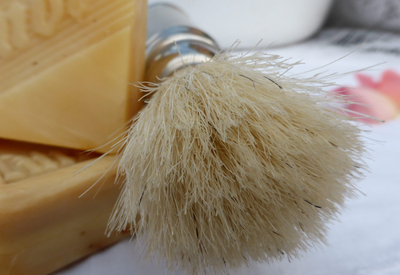
Brushes differ by the knot. A synthetic one, usually nylon, needs only a wetting, dries faster than natural hair and makes a rich lather from relatively little soap, though guides rate its water holding a little below badger. Boar bristle starts out stiff and scratchy, and the tips split and soften with use, so it needs a break-in period and a proper soak before each shave, because the bristles absorb water. Badger hair is soft and holds a lot of water. To build the lather, soak a natural brush in hot water while you shower, or just wet a synthetic one, then squeeze out most of the water. Swirl the tips over the soap with light pressure for about half a minute, until they carry a thick coat. Move to a bowl or straight to your face, work in circles and add water a few drops at a time on the tips. The lather is ready when it looks dense and glossy, like whipped cream, with no large bubbles. Large bubbles mean too much water, so load a little more soap.
Soak, load and whip, then rinse and dry the brush
Choose where to lather by your patience. A bowl lets you see the texture and fix it before it touches your face, while face lathering works the lather straight into the beard; guides suggest moving to the face once you know what a good lather looks like. Apply it in circles, then finish with even strokes so the layer lies flat. Before a second pass, wet the tips and whip up what is left in the brush. For a straight razor, guides recommend this kind of soap or cream lather over anything from a can. Brush care takes a minute: rinse it in lukewarm water until no soap comes out of the knot, squeeze it gently and let it air-dry somewhere ventilated, on a stand or on its base. At 044 Barbershop in Kyiv the face or head shave comes with a hot towel, which softens the beard the way the warm, damp washcloth the AAD suggests does at home. Come in for a hot-towel shave and ask the barber how thick the layer on your face should be, so you know what to aim for when you whip your own lather.