Shaving Without Foam: What Works Instead and What Does Not
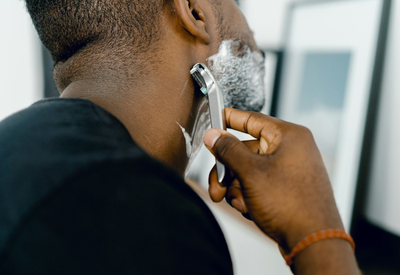
Is it safe to shave without foam?
You can shave without foam, but you cannot shave without something slippery on wet skin. The American Academy of Dermatology (AAD) advises wetting the skin and putting on a shaving cream or gel before a razor blade touches it, and for trimming a beard it adds shaving oil to that list. Foam is one way of delivering the slip and nothing more. A 2023 laboratory study on lab-grown skin, written by staff of a razor manufacturer, compared a dry razor pass with a pass after foam: the dry pass damaged the skin barrier, and foam applied beforehand reduced that damage. So the real question is what goes between blade and skin when the can is empty. The study used skin with no hair follicles, so it says nothing about how close the shave is. Water alone falls short of what the AAD asks for, which is cream or gel on wet skin. Warm water does matter, though. The AAD says it softens the hair so it is less likely to curl into the skin, and suggests shaving at the end of a shower or holding a warm, damp washcloth on the area first. It also suggests washing with a non-comedogenic cleanser beforehand. Without foam you lose the cushion, and the preparation stays. Pressing harder to make up for a dry blade makes things worse, and the AAD notes that a dull blade greatly increases the risk of razor bumps.
Gel, oil, conditioner or soap: what gives the blade its glide
Anything that spreads thin, stays wet and rinses off can stand in for foam. A water-based shaving gel or a cream from a tube is the closest swap, and the NHS gives the same advice: wet the skin with warm water and use shaving gel. Shaving oil is the second route. Rub a few drops into wet stubble, keep the layer thin and rinse the blade after every stroke or two, because oil and cut hair tend to pack into a cartridge. Whichever you use, make sure it is still wet when the razor arrives. The third is hair conditioner. It has slip and no lather, so you can see the line your blade follows; the AAD recommends fragrance-free products for dry skin, which is a fair hint for choosing one. Soap comes last. A plain bar worked up on wet palms makes a cushion, but the AAD calls deodorant soaps too harsh for dry, sensitive skin, so leave those out. Electric shavers are a separate case. Braun says many modern ones run with or without foam, and also says that shaving without foam can irritate sensitive skin, while the AAD asks for a moisturising cream even with an electric razor. The NHS suggests an electric razor for people prone to ingrown hairs. At 044 Barbershop in Kyiv a face or head shave with a hot towel starts with the towel, because a soft hair cuts with less drag.
Test it on your forearm and keep these off your face
Test whatever you pick before it goes on your face. The AAD advises putting a small amount on the inner forearm and using it on the face only if there is no redness or itching, and says to stop any product that stings, burns or tingles. Dish soap and household cleaners were never made for skin, so keep them out of this. Go with the grain, use short strokes and rinse off with warm water when you finish. The AAD then suggests a cool, damp washcloth on the shaved skin and an aftershave made to reduce bumps and irritation. Store the razor somewhere dry. Change the blade after five to seven shaves, since the AAD links a dull one to razor bumps. The NHS adds that using as few strokes as possible and leaving at least 1 mm of stubble helps against ingrown hairs, which matters more when the glide is weaker. At the chair barbers often see that a man who loses his slip presses harder, and the red stripe shows up along the jaw and under the chin where the skin is thinnest to pull. If bumps keep coming back after you have changed your habits, the AAD says to see a board-certified dermatologist. Come in for a face or head shave with a hot towel and ask the barber which kind of slip suits your skin and hair, so your next shave at home starts from a sound choice.