How to Slick Back Men's Hair and Make It Stay There
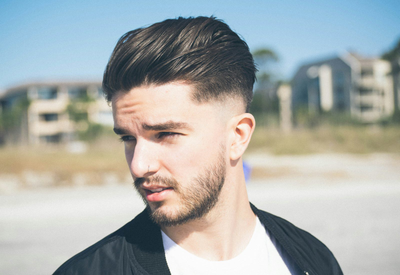
How much length does hair need to go back?
Towel-dry your hair until it is damp, not dripping, warm a small amount of product between your palms, and comb from the front hairline straight back to the crown. Then smooth the sides back over the temples and ears. The method works only if the hair is long enough: a classic slick back needs about seven to eight centimetres on top, and a cut with tapered sides can manage about five. Anything shorter slides forward the moment the comb lifts away, however much product goes in. Check the length before you buy anything: press a lock at the front hairline back against your head and see whether it reaches the crown. Start the comb at the front hairline, not at the crown, so that each stroke carries the front into the lines behind it. The front is where most home attempts fail. On many men the hair at the hairline grows forward or sideways, so an hour after styling that patch stands up while the middle of the top lies flat. The fix is direction, not a second scoop of product. Dry the front backwards first, with a hairdryer and a brush, and only then comb. A hairdryer helps here, and its technique deserves its own article, so we leave it there. Wet hair combed back looks sleek for a short while, then dries in whatever direction it grows, which is why a quick comb after the shower rarely lasts until lunch.
A cut with short sides and a longer front helps
The cut does half the work. A slick back wants the top to stay long at the front and the sides to be shorter, because hair of one length all over puffs out above the ears and refuses to lie flat. A taper from short at the neckline to a few centimetres at the temples gives the top something to rest against, while sides cut too short too fast leave a hard step between the sides and the top. Swept-back hair also bares the temples and the hairline, so look at yours in the mirror before you commit: corners that already recede will show more with everything pulled back, and a longer front lock with a loose sweep may suit you better. At 044 Barbershop in Kyiv the barber usually combs a dry top back before the first cut, to see where it lifts at the front and which side wants more length. Keep the sides in proportion too: sides cut as short as the top is long make the whole shape top-heavy. Product comes next, and it comes down to hold and shine; the pomade, clay and wax guide covers the whole shelf, so here is the short version. Shine means a water-based pomade with strong hold. A matte finish means clay, which suits thick hair that keeps springing up. Fine hair takes a small amount of either, because too much pomade turns thin hair into an oily mass stuck to the scalp, and the style looks wet by noon.
Pick a comb or your fingers by the finish you want
Comb or fingers decides the finish. A comb draws straight lines and lays each strand flat, which gives the glossy, groomed look; on thick hair use a wide-tooth comb, because a fine one drags the product through in patches. Fingers give a looser, softer result with a little lift, and they hide the comb tracks when the top is only just long enough. Many men push the hair back with their fingers, then take one pass with the comb. For a slick back without gel, use less rather than something different: a little cream or plain water, the dryer and the comb will hold short, thick hair through the morning, but expect it to loosen by evening. Curly hair goes back too if it is long enough, since the comb stretches the curl, but it springs shorter as it dries, so add a centimetre when you decide on the length. Two points keep the scalp in good order. The American Academy of Dermatology links hair loss from pulling to styles that tug on the hair again and again, such as tight ponytails and buns, so if you tie long hair back, keep the band loose at the hairline. And if the scalp itches, burns or turns red after a new product, stop using it and see a doctor, because styling products can cause allergic reactions on the scalp. Come in with the top grown out and add styling to the haircut: the barber can comb it back from behind and from the side, and you see the temples and the nape, the two places your own mirror hides.