Hairline Line-Up: What a Barber Can and Cannot Fix
Can a barber fix your hairline, or only tidy the edge?
A barber can clean up the edge of your hairline and shape it, but cannot move it. That edge work is the line-up, or edge-up: the barber takes a trimmer, sometimes a razor, to the forehead, the temples, the area around the ears and the nape, and removes the fine stray hairs so the border reads as a clean line. What stays out of reach is the position of the hairline itself. A barber cannot lower a line that has gone back, and cannot make hair grow where the follicle has stopped working. A line-up comes in two kinds. A natural one follows the edge you already have and only clears the fuzz outside it, which suits almost every face. A squared one cuts a straight line across the forehead and a sharp corner at each temple, and it works best when the hairline is low and even. Hairlines are rarely symmetrical, so the first thing a barber does is stand in front of you and compare the two temples: one usually sits a few millimetres higher, and a squared line drawn through both makes that difference look like a mistake. Which of the two you want is the first question in the chair, since the same hairline reads differently under each. Hairlines also change with age. A 2013 review of normal hairline maturation describes the shape moving from a childlike look to a more mature one, so the line you had at eighteen may sit somewhere else at thirty.
A razor edge looks sharper and costs your skin more
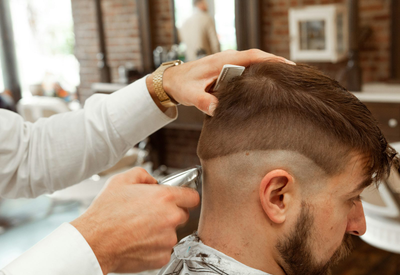
The trimmer does most of the work. The barber brushes the hair at the border forward, takes the guard off and holds the blade square to the skin, the hold Philips describes for contouring a neckline and sideburns, then draws it along the border in short, controlled strokes. The skin should be dry and taut but not stretched. Clients are often surprised how little is cut: a millimetre of fuzz outside the line is the difference between a haircut and a haircut that looks finished. Some barbers finish with a razor for a closer edge. It looks crisper on day one, and it carries the usual price of close shaving: the cut hair ends in a point that can curl back into the skin. DermNet names the jawline as the typical place for those razor bumps and says any shaved area can be affected. NHS advice is to avoid shaving too close, leave a little stubble and shave in the direction of growth. If the forehead edge or the nape flares up after every razor finish, leave that edge to the trimmer. The razor does not harm the follicle, though: Cleveland Clinic says shaving leaves the root beneath the skin alone, so the hair comes back at the same thickness. If bumps turn painful, hot or swollen, the NHS says to see a GP and not to squeeze them. The edge blurs before the rest of the haircut does, because the fine hair along it shows regrowth within days.
Keep a receding temple soft and leave the cause to a doctor
Where the hairline has already receded, a line-up needs restraint. Male pattern hair loss, as MedlinePlus describes it, begins above both temples, and the hairline moves back until it forms an M shape. A hard squared line around that shape makes the recession easier to see, because the eye follows the edge. Shaving the temples higher to match the deeper side does not help either: the hair removed is healthy hair, and the forehead simply reads taller. A soft, slightly rounded line, shorter sides and a little length left at the front tend to look better, and a barber can set that in a few minutes. The treatment sits with doctors. The NHS names finasteride and minoxidil as the main treatments for male pattern baldness, says they do not work for everyone and work only for as long as they are used, and describes a hair transplant as moving hair from the back of the head to thinning patches. If the line keeps moving back or the hair near it keeps thinning, take that to a GP or a dermatologist rather than to a sharper line-up. A cowlick at the front edge is another thing the clippers cannot flatten, so ask the barber to leave some length there. At 044 Barbershop in Kyiv the machine haircut comes with two guard lengths and an edged or faded outline, so you can ask for a crisp border or a soft one. Come in and let the barber, working from the front with both temples in view, set a line that suits the hairline you have.