Barbershop or Hairdresser: What Differs and Where to Go
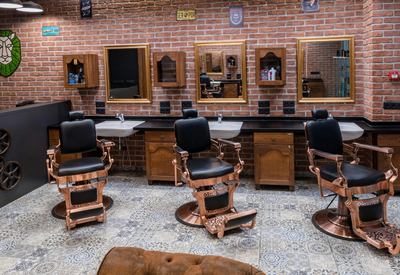
The real difference lies in the tools and the training
Many men think a barbershop is a hairdresser with leather chairs, darker walls and a bigger bill. For a client the difference lies in the daily work: a barber spends the day on short men's cuts and beards, while a unisex hairdresser covers every length, colour and chemical treatment for women, men and children. Prices and interiors vary from one barbershop to the next and from salon to salon, which means they tell you little about how your hair will look a week later. Both cut hair, and a simple trim will come out fine in either place. The gap shows on the harder jobs. A fade that runs from bare skin to two centimetres within a few fingers' width, a crisp line at the nape, a beard shaped to the jaw: for a barber that is routine, and in many salons it is an occasional request. A bob, a balayage or a perm sit the other way round. The word itself gives a hint, since barber came into English through Old French from the Latin barba, beard. In Britain the two trades even have separate qualifications. City & Guilds runs a Level 2 NVQ diploma in barbering whose mandatory units include cutting men's hair and cutting facial hair to shape, and a separate Level 2 diploma in hairdressing where colouring and lightening hair is mandatory. A barber or stylist gets good at what they repeat every day, so start with a plain question: which job do you need done?
What does a barber do daily that a salon does now and then?
A short men's cut rests on two techniques. The first is clipper work: guards of different lengths, the lever on the blade and a trimmer for the outline let the sides pass from skin or a short length up to the top without a visible step. The second is scissors over comb, where the barber lifts the hair on the comb and cuts along the teeth; that is how a classic short back and sides gets its soft shape at the crown and above the ears with no clipper at all. Short hair shows every millimetre. A step left at the temple is visible within a week, while on long hair the same slip hides under the length. A barber checks the blend from the side and from behind, because a mirror straight ahead hides the step that shows in daylight. Beard work is the other half of a barbershop's day: shaping to the jawline, setting a clean edge on the cheeks and under the chin, then a dry or hot-towel shave along the edges. At 044 Barbershop in Kyiv you can book the haircut and beard trim as one visit, so one barber sets the length of the sides, the length of the beard and the join between them. A unisex hairdresser does better at everything outside that range: cutting and layering long hair, a proper blow-dry, colour from the roots to full blonde, highlights and perms. Someone who does balayage every week knows how your hair will behave after lightening and how many weeks the tone will hold.
Choose by your hair and ask two things at the first visit
Choose by the job. A short cut, a fade or a beard that needs a shape points to a barbershop; hair below the shoulders, colour from scratch or a perm points to a hairdresser who does them every week. Grey hair sits in between. If you want to tone it down and keep a natural look, grey camouflage at a barbershop does it, and a full change of colour stays salon work. The same logic holds for children, and wherever you take them, ask whether the place cuts children often. At the first visit, before the cape goes on, ask two things: which part of this cut the barber or stylist does most often, and how it will look in three weeks. A specific answer (which guard on the sides, where the weight stays, when to come back) means they work with hair like yours. Bring a photo of your hair on its best day after a cut and say how many minutes you give to styling in the morning, and how often you can come back: a fade needs a visit every few weeks to stay sharp, while a longer scissor cut forgives a longer gap. Be fair to your current hairdresser as well: a good hairdresser can cut men's hair well too, and plenty have trained in clipper work and fades. If you leave happy, there is no reason to switch. If your next cut is short and your beard needs a shape, come in to us: the barber usually checks how the hair grows at the crown and the neck before the clippers start, and blends the sides into the beard in the same sitting.