Ukrainian Grooming Brands Worth a Place on Your Shelf
Why local grooming brands grew sharply after the year 2022
Before 2022 the shelf of an average Ukrainian man looked predictable: a mass-market shampoo from the supermarket, a shaving gel from the same brand, and if he was lucky, an American pomade bought at a barbershop. Local brands existed but were niche and expensive. Over the following years the picture changed, and not only because of a patriotic impulse. Logistics did their part: imports got more expensive, some European brands left or raised prices, and the exchange rate turned foreign cosmetics into a luxury. At the same time it turned out the manufacturing base was already here — small contract producers who had previously worked to order started launching their own lines. The third factor was the barbershops themselves. Many local brands were born in the chair: masters had used other people's products for years, knew exactly what was missing, and eventually commissioned their own. So Ukrainian men's grooming in 2026 is mostly not about marketing, it is about practice. It is made by people who work with hair and beards every day. There is a downside too: design and communication often lag behind, the jar can look modest and the website homemade. But what is inside has caught up to the point where comparing it to European brands is no longer a polite compliment.
What is genuinely worth buying locally, and what is not yet
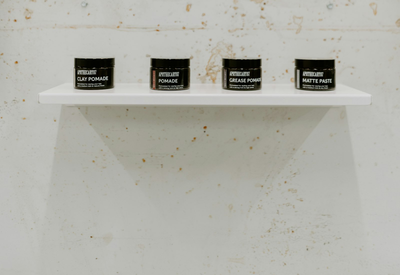
Not everything is worth buying locally, and saying so honestly is more useful than praising everything. Ukrainian brands currently hold three categories best. The first is styling: pomades, clays, pastes, sea-salt sprays. These are relatively simple formulations where everything comes down to the balance of hold and texture, and this is exactly where local brands made the biggest leap. The second is beard care — oils and balms. The base here is carrier oils that are readily available in Ukraine, the difference from imports is minimal, and the price difference is several times over. The third is soaps and shaving products, including creams for a brush. Where local brands still tend to lose is complex scalp chemistry: pharmacy-grade anti-dandruff shampoos, products with active concentrations, treatment serums. That needs a research base a small producer simply does not have, and you are better off with something clinically tested. A separate category is hardware — clippers, trimmers, scissors. There is effectively no Ukrainian production here, and everyone, barbers included, works on Japanese, American or Korean tools. A sensible shelf in 2026 is mixed: local styling and beard care, pharmacy or imported products for problem skin.
How to read a label and not pay extra for a pretty jar
The main skill in choosing is reading the label instead of buying the packaging. A few simple markers that work regardless of brand. In pomades and clays, look at the first three or four ingredients: if it is water, wax and clay, it is water-based and washes out easily. If the first is petrolatum or mineral oil, it is an oil-based pomade — high shine, and it needs its own shampoo. Both are fine, but they are not interchangeable, and confusing them causes half of all disappointments. Beard oil is even simpler: a carrier oil plus essential oils. If the list runs to ten components and seven are exotic, you are paying for the list, not the result. In shampoos, treat sulphates as a tool rather than a villain: aggressive cleansing suits oily skin and harms dry skin. As for price, a Ukrainian pomade in 2026 should cost about the same as good coffee for two; if it costs twice that, you are paying for the jar or for an influencer. And the most practical advice of all: before buying a full-size product, ask your barber to try it on your hair right there in the chair. We do this every day and we do not charge for it, and it is faster and more honest than any review online.