Split Ends in Men's Hair: Why They Happen and What Fixes Them
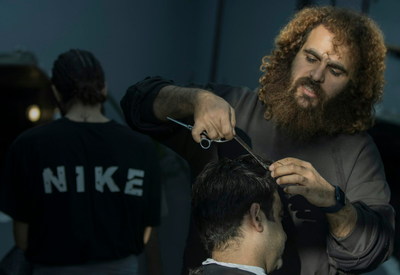
Can a split end ever be repaired?
A split end stays split until it is cut off. Cleveland Clinic quotes Dr. Bergfeld comparing it to a rip in a stocking that runs up the fibre, which is why you need to clip it off, and she adds that regular trims stop hair from breaking and getting even shorter. Oil can hide split ends and make them look tidier, but the same clinic calls that only a temporary fix. The medical name is trichoptilosis, and a 2017 dermatology review notes that it mostly affects longer hair, which has been exposed to the environment for longer. The arithmetic explains why men with length notice it first. Cleveland Clinic puts average hair growth at 4 to 6 inches a year, roughly 10 to 15 centimetres, so the tip of a hair that reaches your collar is about a year old. That year included every hot dryer, every rough towel, a summer of sun and a few swims. A short cut rarely shows the problem, because the oldest hair leaves with each haircut. Once you start growing it out, nobody removes it for you, and the tips begin to fray. Leave it too long and the split keeps climbing the hair, so a trim that would have taken a few millimetres ends up taking a centimetre or more. Look at your ends in daylight: a tip that is whitish, forked or rough between your fingers has already split.
Heat, rough towelling, sun and chlorine wear the tip down
Four things wear a tip down, and each has a source behind it. Heat comes first. The American Academy of Dermatology (AAD) lists the blow dryer, hot comb and curling iron among habits that damage hair, and advises air drying when you can and the lowest heat setting when you cannot. A dermatology review adds that dryers and irons can cook the fibre. Friction comes second. The AAD says brushing your hair 100 strokes a day can cause split ends, that wet hair breaks more easily, and that roughly rubbing it dry with a towel can cause damage. The same review calls combing wet hair from tip to root harsh on the fibre. Sun is third: Cleveland Clinic says ultraviolet rays dry out the strands and weaken their structure, which over time can leave brittle hair and split ends. Chlorine comes last. Cleveland Clinic says pool water makes hair more vulnerable to heat and sun damage, and a 2024 review in An Bras Dermatol adds that chlorine can speed up the breakdown of keratin and weaken the cuticle. Hair that reaches a collar or shoulder also rubs against fabric all day, which is the same friction in smaller doses. Barbers often see the summer pattern: a man swims, dries his hair in the sun, rubs it with a beach towel and arrives in September with ends like straw.
Trim longer hair about every six weeks
Slowing the damage costs very little. Let your hair air dry, or use a dryer on a low or medium setting with a heat protectant, as the AAD advises. Wrap it in a towel or an old t-shirt to soak up the water instead of rubbing, and detangle wet hair with a wide-tooth comb, not a brush. In a chlorinated pool Cleveland Clinic suggests a swim cap or keeping your head above water, then a rinse with tap water afterwards. None of this repairs a tip that has already split, so the trim still has to happen. Cleveland Clinic suggests a trim every six weeks to remove damaged ends, and a stylist judges how much needs to go. Hair grows roughly a centimetre a month, so six weeks gives you one to two centimetres of spare length, enough for a modest trim. For a man with hair past the ears or down to the collar, six weeks is a sensible starting point, and at the mirror the barber can tell you whether your ends allow a longer gap. At 044 Barbershop in Kyiv we take off only the frayed part when you are growing length, and we say so when your ends are still healthy and a visit can wait. Show the barber where your length sits now and ask for just the ends. If you are growing your hair out and the tips already look like straw, come in and a barber will check them in good light and cut only what has split.