Balbo beard: what it is, who it suits and how to grow it
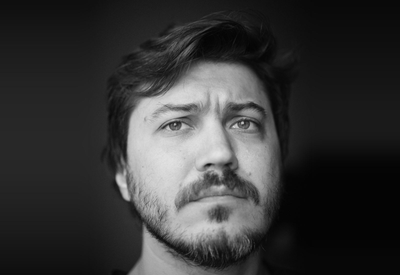
The gap at the mouth is what makes it a Balbo
The usual mistake with a Balbo is to give that name to every neat chin beard. It covers something specific: a separate moustache, a chin beard, shaved cheeks and no sideburns. Between the moustache and the lower part runs a clean gap at the corners of the mouth, and that gap defines the style. Close it and you have a goatee, where moustache and chin join into one unit around the mouth. Narrow the lower part to a point and you are close to a Van Dyke. Most versions run the beard a little along the jaw, although some guides keep it to the chin, and a small tuft under the lower lip is optional, so the details vary from one barber to the next. The name comes from Italo Balbo, the Italian aviator and air marshal who wore this shape. It stays popular for a practical reason: the cheeks are shaved, so they have nothing to prove. Patchy cheeks are no obstacle as long as the chin and moustache grow dense. If your beard refuses to meet at the sides, a Balbo turns that into a decision, and nobody wonders whether you simply skipped a shave. The outline can already be read on short stubble with sharp edges, although the full look needs a thicker base on the chin. So before you ask for one, look at how your hair actually grows around the mouth and on the chin.
Who does it suit, and can it go without a moustache?
Guides most often recommend the Balbo for round and square faces. On a round face the shaved cheeks narrow the outline and the chin beard adds some length below. On a square face it draws the eye away from the corners of the jaw. Sources argue about oval, triangular and heart-shaped faces, so the mirror decides there. People often search for a Balbo without a moustache, but the moustache is part of the definition. Take it away and you are left with a beard along the chin and jaw under a bare upper lip, which is a different shape. It can be done, so ask for it by description and the barber will know what you mean. Density counts too: the chin and moustache must grow thickly, because every sparse spot shows on such small areas. If the chin or moustache grows in patches, give it a few more weeks before deciding, since longer hair covers thin spots. At 044 Barbershop in Kyiv a beard trim combines modelling with a dry or hot-towel shave, so the shaved cheeks and the gap come out clean. Barbers often see one corner of the mouth growing thinner than the other, and they usually set both gaps from the weaker side. You rarely notice this at home, because in the mirror you look at yourself straight on, while the unevenness shows from the side when you talk or turn your head.
Grow it first, then shape it
The shape starts with length, so let the beard grow for about four weeks and leave it alone until then. Cutting too early is the most common home error: you carve a Balbo out of stubble before you know where the dense patches are, and lose hair the shape needed. After that, shave the cheeks yourself whenever stubble appears. Guides give different intervals, and the simple test is whether the outline still looks sharp. The second typical error happens during a home tidy, when the moustache grows down and reconnects with the beard. Check the corners of your mouth every time, since once the gap disappears the style has turned into a goatee. Keep the moustache above the lip line and hold the lower part at the same length on both sides, because a few millimetres of difference makes the face look crooked. Use small scissors and a comb for the moustache and short strokes of a trimmer for the chin outline, because one long pass easily takes too much off. Oil or balm goes a long way on such a small area, so use very little. To stop the shape from blurring, come in for modelling every one to two weeks. Come to us with four weeks of growth, and the barber will find where your moustache and chin beard separate evenly on both sides of the mouth.