Why Your Beard Turns Red or Ginger, Even With Dark Hair
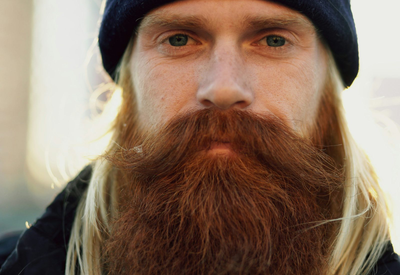
Why is my beard redder than the hair on my head?
Your beard follicles set their own colour, and they do not have to copy the ones on your head. Hair gets its shade from two pigments: eumelanin, which is black or brown, and pheomelanin, which is red-yellow. Red hair is mostly pheomelanin with a little eumelanin, and the gene that sets the balance is called MC1R. Red hair is usually inherited as a recessive trait, so a man with dark scalp hair can carry one copy of a red-hair variant without being a redhead. A study of red-haired families found signs that a single variant can already change beard colour, and dermatologists note that a red tinge is common in beard hair even when the hair on the scalp is essentially brown. That is why ginger hairs in a black beard rarely come from nowhere. The warm hairs were usually there from the start, and they show once the beard grows long enough, or once the darker hairs around them lighten or go grey. Colour also varies from hair to hair, so the cheeks, chin and moustache can each carry a different mix of shades. A beard that looks black at three millimetres can show copper in daylight at three centimetres. If the shade is the one you have always had, you are looking at genetics. Think back to when you first noticed the warm shade: after a summer, after a dye, after the first grey hairs? The answer points to the cause in the next paragraph.
Sun, old dye and the first grey hairs shift the shade over time
A colour that shifts later has other causes. Sunlight bleaches hair pigment: the pigment absorbs light to protect the hair protein and breaks down in the process. Laboratory work shows that UVA degrades both the dark and the red pigment, and that the older stretch of a hair carries more of that damage than the newer one. In a beard the oldest part is the tip, so after a summer outdoors many men find the ends lighter and warmer than the roots. Dye has its own habits. A dark home dye fades unevenly, and colourists explain that the small blue-toned molecules wash out first and leave the warm tones behind, which is why a black dyed beard often turns reddish within a few weeks. Age changes the picture too. Hair can darken over the years, and nearly everyone's hair eventually goes grey when the follicles stop making melanin. The timing is partly inherited, and the first white hairs in a ginger-brown beard make the whole beard read lighter and yellower. At 044 Barbershop in Kyiv the barber usually looks at the beard from the side and tells you which hairs are grey and which are only sun-faded, because the two call for different decisions. One rare cause deserves a line: a long shortage of protein, minerals or vitamins can change hair pigment, although a dermatology review admits that exact data are often lacking. If the colour changes together with weight loss, tiredness or hair loss, see a doctor before you buy supplements.
Trim the faded tips and put sunscreen on exposed skin
A ginger tint does no harm, so it needs no fixing. If you dislike it, dye is the only way to change the colour, and colourists reach for ash shades against warm tones because they cancel the red. The simpler route is to leave the colour alone and trim: the faded tips are the lightest part of the beard, and a centimetre off the length brings back a shade closer to the natural one. A shorter beard also shows fewer differences between hairs. The skin needs a separate word. Pheomelanin gives no protection against ultraviolet light, and people who make mostly pheomelanin tend to have fair skin that tans poorly. If you have the red pigment, put sunscreen on the cheeks and neck wherever the beard does not cover the skin, and wear a cap in summer so the tips fade more slowly. To see what is really happening to your colour, take a photo of the beard from the same side in daylight once a month. Asking a barber to pull out single ginger hairs makes little sense, since they belong to the beard. A barber evens the length instead, because hairs of the same length read as one colour. If you decide to dye, test the shade on a few hairs under the chin first and plan to repeat it, because the colour fades again. Come in for a beard trim, and the barber can go through the shades on your cheeks and chin with you in the mirror and set a length where they blend.