Growing a Beard at 16 or 17: What Decides It and What to Do
Is it normal that your beard barely grows at 16?
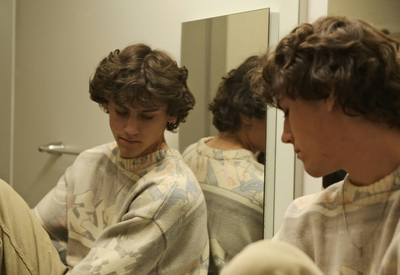
At 16 or 17 it is normal to have a moustache that is only a shadow, a little hair on the chin and bare cheeks, and it is equally normal to have a proper beard already. There is no age at which a beard is due. Puberty in boys starts anywhere between 9 and 14 and takes several years, and facial hair arrives as part of it, so a classmate with stubble at 15 simply started earlier. MedlinePlus says boys finish puberty about three and a half to four years after it starts, so your face keeps changing through that stretch. MedlinePlus puts adult hair patterns, facial hair included, at about 17 to 18, and Cleveland Clinic notes that most beards keep gaining thickness and coarseness from 18 to 30, so a 16-year-old's face is still a draft. Barbers see the worry every week: a boy arrives sure his beard is broken because a friend's came early, and in the mirror the hair on his lip is simply fine and pale, visible only in strong light. What the beard will look like depends mostly on genes. Testosterone switches the hair on at puberty, but how thick it grows is set by how your follicles respond, and a thin beard at your age says nothing about your hormones. Do not look only at your father: the men on both sides of the family give a rough idea of yours. Nothing you buy or rub on your face brings that date forward.
Puberty, genes and boosters: what really sets the thickness
Late bloomers exist and they are usually not ill. If nothing in your body has changed by 14 or 15, see a doctor: MedlinePlus sets the line at 14, the NHS at 15. Most often it is constitutional delay, which runs in families and sorts itself out, and the doctor is there to rule out the rarer causes. Book the same visit if puberty began and then seems to have stalled, or if you have almost stopped growing taller. A thin beard on its own is no reason to go. KidsHealth suggests asking a parent to book the appointment if that feels easier. Then come the boosters. Oils, pills and sprays promise a lot, and Cleveland Clinic points out that hair regrowth products are not FDA approved to grow beard hair and are generally not recommended. Minoxidil has one randomised trial behind it, on men aged 20 to 60, and it is used off-label for beards. Topical minoxidil is not FDA approved under 18, no guideline sets a minimum age, and one published case describes a 17-year-old who developed swelling after seven weeks of 5 percent minoxidil on his beard. For a teenager that decision belongs to a paediatrician or dermatologist, not to a shop shelf. Shaving the fuzz to thicken it does not work either: Mayo Clinic and DermNet both say shaving changes neither thickness nor growth rate, and the blunt tip only feels coarser.
Skip the growth products and shape what you already have
What you can do is make the hair you have look chosen. A light moustache and a tuft on the chin look better inside a clean outline than spread across the face with soft edges. Use an electric trimmer with a guard instead of a razor, and leave the cheek line and the neckline alone: at 16 that is the part cut too high at home, and it grows back slowly. If you do shave, DermNet advises a new sharp blade, shaving in the direction the hair grows and a single pass. The haircut matters as much as the beard. Short, tidy sides and a clean neckline make a thin beard look deliberate, while hair that is shaggy around the ears keeps the same beard looking unfinished. Leaving the top longer than the sides pulls the eye up and away from thin cheeks, and a neckline kept soft rather than cut square looks right on a face that will still fill in. Barbers also see the opposite mistake: a boy shaves everything to zero each week because the patches annoy him, and the face never gets to show what it has. At 044 Barbershop in Kyiv the barbers can do a beard trim, or a haircut with a beard trim, for a teenager whose growth is still uneven: they shape the moustache and chin and leave the cheeks to catch up. Come in with the beard you have now, and the barber can show you in the mirror, from the side and the back, which outline and which haircut make it look like a decision.